Why Your Neck Hurts and What Actually Fixes It
Why Does My Neck Hurt
You slept on it wrong.
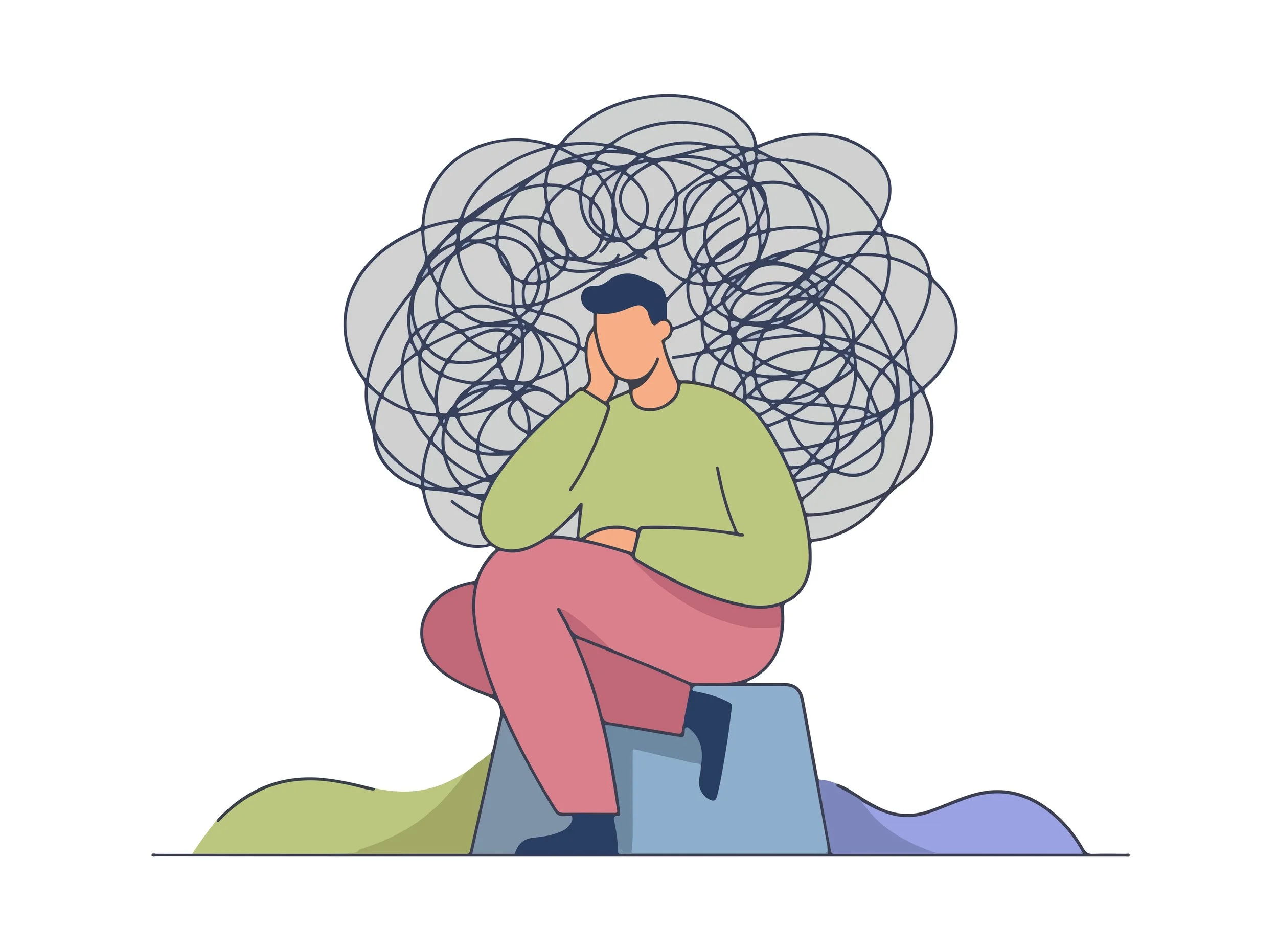
That is what most people tell themselves the first time it happens. Then it happens again the next month. Then it starts showing up on Thursday afternoons when work gets heavy, and on Sunday nights when you are already thinking about Monday. At some point it stops being a bad night of sleep and starts being a thing you just live with.
I see this every week in Brewerytown. Someone walks in and apologizes for coming in about something so small. They have had it for two years.
Neck pain gets dismissed because it rarely stops you completely. It just makes everything a little worse. Sleep gets shallower. Focus gets shorter. You stop turning your head to check your blind spot and start turning your whole body instead, and you do not even notice when that started.
This post breaks down what is actually happening in your neck, why the most popular explanation for it is shakier than you have been told, and how to figure out what is driving yours.
How Common Is Neck Pain?
It is one of the most common physical complaints on the planet. Global Burden of Disease data put the number at roughly 203 million people worldwide living with neck pain, with women affected more often than men.
The disability piece is what surprises people. Out of nearly three hundred conditions studied in a major global analysis, neck pain ranked fourth highest for years lived with disability. It sits in that group with conditions people take far more seriously, and it earns that spot precisely because it lingers.
The clinical dividing lines are worth knowing. Acute means under six weeks. Subacute runs six to twelve weeks. Chronic is anything past three months. That three month mark matters because the longer pain persists, the more the nervous system adapts around it, and the more the original cause gets buried under compensation patterns.
Prevalence climbs with age well into the seventies. So if you are in your thirties and telling yourself this is just what getting older feels like, the data does not really support that yet.
Why Human Necks Are Built the Way They Are
Go back far enough and our ancestors moved on four limbs. In that arrangement the head hangs forward off the spine and the shoulder girdle carries a lot of the work. Gravity runs along the spine rather than straight down through it.
Then we stood up.
Bipedalism put a ten to twelve pound skull directly on top of seven small, highly mobile vertebrae. Picture a bowling ball balanced on a flexible stick, and then picture that stick being asked to keep the ball steady while you run, lift, sleep, and live.
We got something real in that trade. The human neck moves beautifully. It gave us wide visual scanning, fine head control for communication, and the ability to track the world around us. What it gave up was structural stability.
Your skeleton has not meaningfully changed in a hundred thousand years. Your environment changed in about thirty. That gap is where a lot of neck pain lives.
Does Tech Neck Really Cause Neck Pain?
Here is where I want to be more careful than most of what you will read.
The number you have seen everywhere comes from a 2014 study by Dr. Kenneth Hansraj. Using a computer model of the cervical spine, he calculated that the head exerts about ten to twelve pounds in neutral, rising to roughly twenty seven pounds at fifteen degrees of forward tilt, forty pounds at thirty degrees, forty nine at forty five degrees, and sixty pounds at sixty degrees. Sixty degrees is about where your head sits when your phone is in your lap.
Those are real calculations and the biomechanics behind them are sound. Load on the cervical spine does increase substantially as your head moves forward.
What is far less certain is whether that load is what is causing your pain.
A systematic review looking specifically at forward head posture and neck pain found the relationship controversial. Adults with neck pain did show measurably more forward head posture than adults without it, but the same comparison in adolescents showed no difference. The texting research conflicts too. A five year Swedish cohort found a link between texting time and musculoskeletal symptoms that was stronger in the short term than the long term. A Brazilian study of eighteen to twenty one year olds found no correlation at all.
Plenty of people with textbook forward head posture have zero pain. Plenty of people with beautiful posture hurt constantly.
So posture is a load factor worth managing. It is one input among several, and treating it as the single cause is how people end up buying a posture brace, wearing it for three weeks, and feeling exactly the same.
If your neck hurts, position is worth auditing. It is rarely the whole story.
What Is Actually Inside Your Neck
Seven cervical vertebrae, stacked C1 through C7, with discs between most of them acting as shock absorbers. The spinal cord runs through the center carrying signals between your brain and everything below. Ligaments provide stability, muscles provide movement, and fascia webs the whole thing together so that a problem in one place rarely stays in one place.
Your neck also does not exist by itself. Above, it attaches to the skull and connects functionally to the jaw, which is why clenching and grinding show up as upper neck tension. Below, it ties into the shoulders and the thoracic spine, which is why a stiff upper back so often presents as a sore neck. Your rib cage and diaphragm are in the conversation as well through how you breathe.
A few muscles come up constantly. The deep neck flexors act as the core of your neck, and when they are weak the surface muscles take over work they were never designed to do. The trapezius is the large kite shaped muscle across your upper back that feels tight in almost everyone. The levator scapulae, whose name just means lifter of the shoulder blade, is the classic stress muscle. The scalenes run along the side of the neck and influence both posture and breathing.
Then there are the nerves. The cervical plexus branches into your head, neck, and upper shoulders. The brachial plexus travels from the lower neck into the arm, which is why irritation up top can produce numbness, tingling, or weakness all the way down to your fingers.
One thing that gets overlooked is proprioception. Your neck is dense with position sensors that tell your brain where your head is in space, and that information feeds directly into balance and visual tracking. It is a real part of why chronic neck tension can leave people feeling foggy, unsteady, or slightly off in ways that have nothing to do with pain.
How to Find the Root Cause of Your Neck Pain
Rule one in clinical work is that where you feel pain is often not where the problem started. You might feel it at the base of your skull while the actual weakness sits in your deep neck flexors. You might have symptoms in your arm while the source is in your mid back.
Start with three questions. When did this begin, and what else changed in your life around then? Where exactly do you feel it, and is it sharp, dull, burning, or achy? How often does it show up, and does it track with work, sleep, or stress?
Then test movement. Turn your head left and right, tilt side to side, and notice where it stops and whether it stops because of stiffness or because of pain. Notice whether sitting makes it worse and moving makes it better, or the reverse. Anything shooting down your arm or into your shoulder blade deserves attention from someone who can examine you.
The quality of the pain tells you something too. Muscular pain tends to feel tight, sore, and diffuse. Joint pain feels deeper and more specific, often with a sense of catching or grinding. Nerve pain is sharp, burning, or electric, and it travels.
Audit your daily environment honestly. Pillow height and sleep position matter, particularly avoiding the chin to chest collapse that a too tall pillow creates. Screen height matters, and a laptop on a desk puts almost everyone in flexion for hours. A bag carried on the same shoulder every day matters more than people think.
And check in on stress. When you are braced and scanning, your traps, levator scapulae, and suboccipitals fire to hold your head up and ready. That is a pattern I see constantly in the office, and in people carrying a lot without naming it, the neck is often the first place it surfaces.
What Actually Helps
The honest answer is that treatment depends on what is driving it, which is why generic advice fails so often.
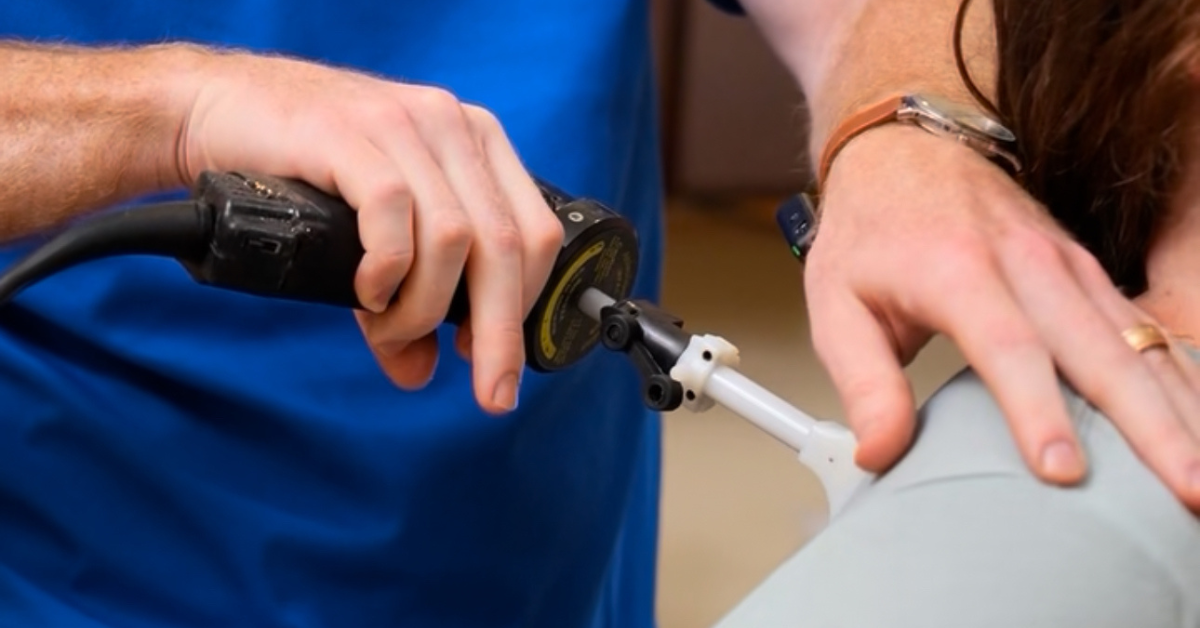
Adjustments restore motion to joints that have become restricted, and restoring motion changes how the surrounding muscles behave. Soft tissue work addresses trigger points and the referral patterns that make a jaw problem feel like a neck problem. Both work better paired with movement than delivered alone.
Rehab is where lasting change happens. Controlled movement beats passive stretching for most people, because stretching a muscle that is already overworked and lengthened rarely gives more than temporary relief. The targets are the deep neck flexors and the scapular stabilizers, built through chin tucks, band work, and rows, progressing from gentle mobility into actual load.
Thoracic mobility deserves more attention than it gets. Your upper back drives healthy neck rotation, and improving rotation there takes strain off cervical joints immediately. Open books, wall rotations, and cat cow variations are simple and effective.
Shoulder strength belongs in the conversation as well, since weak shoulders force neck muscles to compensate on everything you lift and carry.
For arthritic necks, motion is the medicine. Joints are fed by movement, and the instinct to protect an arthritic neck by keeping it still makes it worse over time.
Nutrition and hydration are the quiet contributors. Discs depend on motion and fluid to stay healthy. If you are chronically dehydrated, inflamed, or short on the nutrients your tissues need to recover, everything above works more slowly.
What I See in the Office
The most common case I see is someone who has been dealing with it for a year or more, has been told they are just tight, and has been given a stretch that helps for ten minutes.
What their body was usually telling them was that a joint had stopped moving well, the surrounding muscles had taken over the job, and the whole system had quietly reorganized around the restriction. They did not notice it happening because it happened slowly.
Most people feel meaningful change within a few weeks when the plan matches the actual cause. What almost everyone says at some point is a version of the same thing. They wish they had come in before they had gotten used to it.
That is the part worth hearing. Getting used to something is not the same as it being fine.
Your body is giving you data. It is not turning on you.
Episode 15 of Feeling Good Feels Good goes deeper on all of this, including the anthropology of how our necks ended up in this position and the cases I have seen that changed how I treat it.
One Thing to Try This Week
Raise your screen. Whatever you are looking at most hours of the day, get the top of it to eye level. A stack of books works as well as a stand.
Then set one alarm in the middle of your workday for thirty seconds of moving your neck through its full range. Not stretching it. Moving it.
Small, repeated, and boring beats intense and occasional almost every time.
If your neck has been bothering you longer than a few weeks, come see us. We are on Girard Ave in Brewerytown and we will figure out what is actually driving it.