Why Your Body Won't Calm Down: The Science of Your Sympathetic Nervous System
There was a period in my life where I woke up every morning already tired. Not groggy, not slowly coming to. Just tired before the day started. I would drink coffee to get moving, feel wired but hollow by noon, and lay down at night with a mind that refused to stop. I was technically fine. Nothing was wrong. And yet something clearly was.
What I did not understand then was that my body was not malfunctioning. It was doing exactly what it was designed to do. The problem was that it was doing it constantly, without a break, without a signal that it was safe to stop.
That is what this episode of Feeling Good Feels Good is about.
Your Body Has an Automatic Control Center
Most of what your body does every second of every day happens without you thinking about it. Your heart rate. Your breathing. Your digestion. Your blood pressure. The size of your pupils. These are not things you consciously manage and yet they are always being managed, quietly and precisely, by a system called the autonomic nervous system.
The autonomic nervous system, or ANS, is essentially your body's autopilot. It governs nearly all involuntary organ function through a network of neural circuits running through the hypothalamus, brainstem, spinal cord, and peripheral ganglia. It never clocks out. It never takes a break. And it responds instantly to everything happening inside and around you.
Within the ANS there are two primary branches that work in opposition. The sympathetic nervous system is your gas pedal. It speeds things up, mobilizes energy, and prepares you to act. The parasympathetic nervous system is your brake. It slows things down, promotes recovery, and restores the body to baseline.
In a healthy system these two branches take turns. Sympathetic tone rises when you need to perform. Parasympathetic tone rises when you rest. The shift between them is smooth, automatic, and appropriate to the moment.
The problem most people face is that the gas pedal gets stuck.
What the Sympathetic System Actually Does
The phrase "fight or flight" was coined by the physiologist Walter Cannon in 1915 and it remains the most accurate shorthand for what the sympathetic nervous system does when it activates. The sequence begins in the amygdala, the brain's primary threat detection center, which signals the hypothalamus the moment it perceives danger. That signal travels down the spinal cord through pathways originating at thoracic and lumbar segments and reaches target organs within approximately 0.2 seconds of the perceived threat. That is faster than a blink.
What follows is a coordinated whole-body response. Heart rate increases. Blood pressure rises. The bronchioles in your lungs dilate to bring in more oxygen. Glucose and fatty acids flood the bloodstream to fuel your muscles. Your pupils widen to take in more visual information. Digestion slows as blood is redirected away from the gut toward the skeletal muscles. Pain perception is blunted through the release of natural opioids. The immune and reproductive systems are temporarily deprioritized.
Simultaneously the hypothalamus activates the HPA axis, the hypothalamic-pituitary-adrenal system. The hypothalamus releases corticotropin-releasing hormone, which signals the pituitary to release adrenocorticotropic hormone, which signals the adrenal glands to release cortisol. This hormonal cascade unfolds over minutes rather than milliseconds and sustains the stress response for as long as the perceived threat continues.
All of this is elegant and extraordinarily useful when you are actually in danger. The problem is that your nervous system cannot always distinguish between a predator and a deadline. Between a genuine emergency and a difficult conversation. Between physical danger and a notification on your phone.
Why the System Gets Stuck
The sympathetic nervous system evolved in a world where threats were real, immediate, and usually brief. You run from something, you fight something, the threat resolves, cortisol drops, and the parasympathetic system takes over. The brake engages. You recover.
In the modern world the threats are rarely that clean. They are chronic, ambient, and often social rather than physical. The difficult boss who says the same thing in every meeting. The financial pressure that never fully resolves. The news cycle. The commute. The caffeine you consume to compensate for the sleep that elevated cortisol is preventing. These inputs do not trigger the same dramatic sympathetic activation as a physical threat but they create a sustained low-level tone that never fully releases.
As Harvard Health describes it, chronic low-level stress keeps the HPA axis activated much like a motor that is idling too high for too long. The brake never fully engages. The body stays in a state of low-grade readiness. And over time that state has measurable consequences.
What Chronic Sympathetic Activation Does to Your Body
The research on chronic sympathetic nervous system overactivity is substantial. A 2024 peer reviewed paper in Cardiovascular Research documented the links between sustained sympathetic overactivation and hypertension, heart failure, metabolic syndrome, and insulin resistance. A separate body of literature connects chronic elevated cortisol to impaired hippocampal neurons, disrupted sleep architecture, immune suppression, and increased inflammatory markers.
The digestive consequences are also well established. When sympathetic tone dominates, blood is persistently redirected away from the gastrointestinal system. Motility slows. Secretions decrease. People experience bloating, irregular bowel habits, and a general sense that their digestion is unreliable. The connection between chronic stress and gut dysfunction is not metaphorical. It is physiological.
Sleep suffers for related reasons. Cortisol follows a natural circadian pattern, rising in the early morning and falling toward evening to allow melatonin to rise and prepare the body for sleep. When the HPA axis stays chronically activated, cortisol remains elevated into the evening. Melatonin is suppressed. Sleep onset is delayed. The sleep that does come is lighter and less restorative. The next morning begins with a cortisol system that never fully recovered, and the cycle continues.
The tension headaches, the jaw clenching, the shoulder and neck tightness that most people accept as normal features of a busy life are often the musculoskeletal expression of a nervous system that has been running on high alert for too long. The muscles stay slightly contracted. The joints stay slightly compressed. The body is braced for something that is never fully coming and never fully going.
The People Who Live in This Mode
Chronic sympathetic dominance does not look the same in everyone. In some people it presents as anxiety, a persistent sense of unease without a clear cause. In others it looks like exhaustion that sleep does not fix, or irritability that surfaces at unexpected moments, or a difficulty relaxing even in situations that should feel safe.
High performers often wear it invisibly. Their nervous system has adapted to a high baseline of activation and they interpret it as focus or drive. They function well for years and then suddenly do not. The burnout that follows is not a personality failing. It is a biology that ran out of resources to maintain the performance the person was demanding from it.
Research shows that chronic illness, PTSD, and high-stress careers all produce elevated sympathetic baseline activity, reduced heart rate variability, and higher inflammatory markers. These are measurable, objective changes in how the body is operating. They are also reversible with the right inputs.
How to Reset It
The parasympathetic nervous system responds to specific inputs and the science behind each is well established.
Breathing is your most direct tool. Slow controlled breathing at approximately five to six breaths per minute, sometimes called resonance breathing, has the strongest evidence among everyday practices for shifting ANS balance toward parasympathetic dominance. Extending the exhale beyond the inhale is particularly effective. When you exhale longer than you inhale, the body interprets it as a signal of safety. The vagus nerve responds. Heart rate variability improves. The brake gently engages.
Cold exposure to the face or neck triggers the diving reflex, a primitive parasympathetic response that slows heart rate and reduces sympathetic output within seconds. A splash of cold water on the face is not a cure but it is a real and immediate shift.
Exercise is more nuanced than most people realize. Acute exercise is a sympathetic event. Heart rate rises, adrenaline increases, the body mobilizes for effort. But the recovery period following exercise is reliably parasympathetic. Research shows parasympathetic activity increases after exercise and can persist for up to 48 hours following intense sessions. The people who exercise and feel worse are often not recovering between sessions. The workout is the sympathetic input. The recovery is where the parasympathetic benefit lives.
Food timing and composition matter in ways most people overlook. The early morning cortisol surge that helps you wake up is partly SNS-driven. A high-sugar breakfast stacked on top of that cortisol peak amplifies the glycemic response and keeps the system elevated. Protein before caffeine stabilizes blood sugar, supports dopamine and acetylcholine production, and sends the body a signal that it is fed and safe. Magnesium and omega-3 fatty acids both have evidence for supporting parasympathetic tone and reducing the inflammatory consequences of chronic stress.
Mindset and perception are not soft variables. Research consistently shows that the body responds to perceived threat regardless of whether the threat is physical or cognitive. Reframing a stressful situation, not as denial but as deliberate reappraisal, measurably reduces cortisol output. Journaling, specifically what researchers call expressive writing, reduces limbic activation and lowers inflammatory markers. These are not feel-good suggestions. They are evidence-backed interventions with physiological consequences.
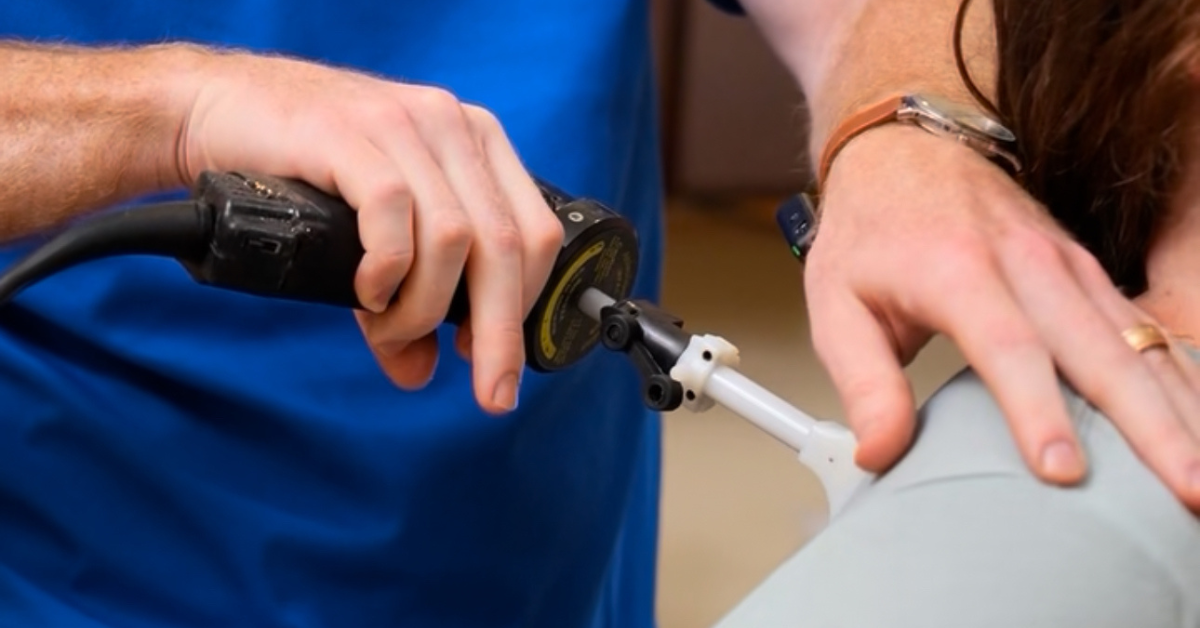
Spinal health plays a role that is underappreciated outside of chiropractic. The sympathetic nervous system originates in the thoracic and lumbar spinal segments. When those joints are restricted and moving poorly, the nervous system receives altered input that can maintain or amplify sympathetic tone. Restoring proper joint motion does not just address mechanical pain. It affects the quality of the signal the nervous system is receiving and sending.
A Note on My Own Experience
That period I described at the beginning was a period of time when I could not shut off my sympathetic nervous system. The wired but empty mornings. The mind that would not stop at night. Nothing felt wrong enough to explain it and nothing I tried seemed to fully fix it.
The good news is that the more I learned about it, the more I realized this is something you can train, just like anything else.
Breathwork became deliberate rather than incidental. I started timing my eating to work with my cortisol curve rather than against it. I became more intentional about when I took in stimulating input, not just stressful things but exciting things too, because excitement and stress run through the same system. Thoracic spine adjustments made a measurable difference by addressing restriction in the exact spinal segments where sympathetic output originates. And I started building regular habits that deliberately activated the parasympathetic system, giving my nervous system permission to power down when it did not need to be on.
That accumulation of inputs over time was what changed things. Not one fix. Not one breakthrough. Just a growing understanding of what my body needed to feel safe enough to rest.
Your body is not your enemy. It is trying to protect you. The work is in giving it enough evidence that it can stand down.
Feeling good feels good.
This post is based on Episode 16 of the Feeling Good Feels Good podcast with Dr. Zachary Tripp. Listen on Spotify or watch on YouTube.