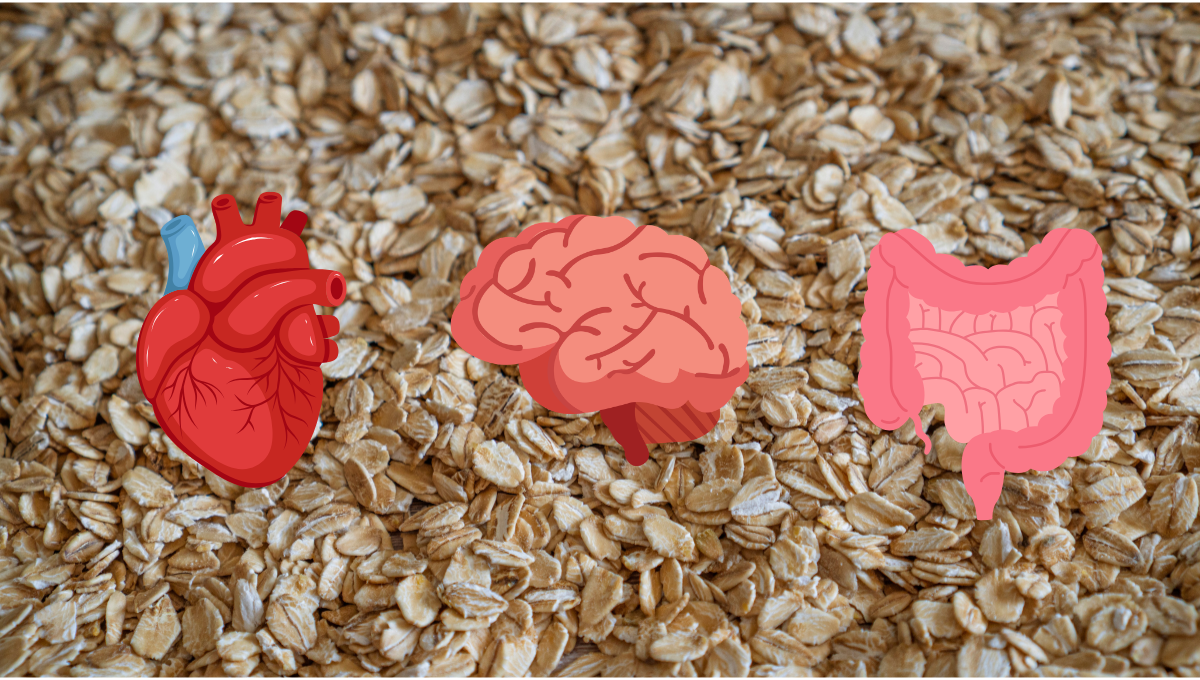
Oats: The Overlooked Grain That Enhances Your Brain, Reduces Inflammation, and Supports Your Heart and Gut
Most people think of oats the same way they think of flossing. They know it is good for them. They have been told it is good for them. They do it without thinking too hard about why. And that is a shame because what oats are actually doing inside your body — especially your brain — is one of the most interesting stories in nutrition science. And almost nobody is telling it.
This episode of Feeling Good Feels Good is about oats. Not the Quaker guy on the box. The actual grain, where it came from, what it does to your biology, and why the research on oats and the brain specifically stopped me in my tracks.
What Oats Actually Are
Oats come from a plant called Avena sativa — a cereal grain like wheat or barley but naturally gluten-free. The caveat worth knowing is that most commercially processed oats share facilities with wheat, so if you are gluten sensitive or celiac you need certified gluten-free oats specifically.
Not all oats are equal and the processing matters more than most people realize. At the least processed end you have whole oat groats — the oat in its full natural form with only the husk removed. Chewy, slow to cook, maximum fiber and nutrients intact. Steel cut oats are groats chopped into smaller pieces with steel blades — dense, hearty, 20 to 30 minutes to cook, the slowest to digest and the most stable for energy. This is the form that earns the most respect clinically.
Rolled or old-fashioned oats are groats that have been steamed and flattened — faster to cook, softer texture, still a solid source of fiber. Instant oats are pre-cooked, dried, and rolled extra thin — the most convenient and the least satisfying. They digest quickly and can spike blood sugar if not paired with protein or fat. Oat flour and oat milk sit at the most processed end of the spectrum, often mixed with additives that change the nutritional picture entirely.
The form you choose matters. If oats have never felt right for your body it is worth asking whether you were eating the right type at the right time with the right things alongside them. More on that shortly.
Where Oats Came From
The story of oats is the story of an underdog that survived everything thrown at it.
The earliest evidence of humans using oats goes back over two thousand years to Western Europe and North Africa. But oats were not cultivated on purpose at first. Farmers growing wheat and barley watched oats show up uninvited in their fields — an agricultural weed, pulled out and discarded. It was not until people in colder, wetter climates realized oats could thrive where other grains could not that they started treating them with any respect.
In Scotland and Ireland oats became survival food. Not peasant food — survival food. Wheat could not handle the cold, rainy north. Oats could. People made oatcakes, porridges, flatbreads, and carried dry oats with them when traveling. The grain kept populations alive through hard winters and long days in the field. That is why to this day oats carry a cultural weight in those countries that no amount of trendy rebranding can manufacture.
Oats came to North America and immediately got demoted again. Corn and wheat were the cash crops. Oats were mostly horse feed. Even the phrase "sowing your wild oats" comes from oats growing untamed and out of place — unpredictable, unwanted. The grain seemed destined for obscurity.
Then in 1877 a group of entrepreneurs in Ravenna, Ohio founded what became the Quaker Oats Company — the first registered trademark for a breakfast cereal in the United States. The Quaker image on the box was not tied to any religious affiliation. It was chosen for what the Quaker movement represented: honesty, purity, simplicity, and trust. In an era when food safety was genuinely questionable, attaching those values to a grain product was brilliant marketing.
They were the first to sell oats in cardboard packaging instead of barrels. The first to put recipes on the box. The first to position oats as a human health food rather than livestock feed. They essentially convinced an entire country to eat something it had been feeding to horses.
By the 1960s and 1970s researchers had started connecting the specific fiber in oats to lower cholesterol levels and suddenly oats had a new identity — not just edible but medically endorsed. The FDA eventually approved an official health claim for oat beta glucan in 1997, the first time a public health agency had ever claimed that a specific food could directly help prevent disease. That was a genuinely historic moment in the relationship between food and medicine.
And then oats got trendy. Overnight oats, oat milk lattes, oat protein bars, oat-based skincare. The marketing machine found oats again. But underneath all of it is still a grain that has been feeding people through ice and war and poverty and bad marketing for thousands of years.
What Oats Do for Your Body
The reason oats have earned genuine scientific credibility is a single fiber called beta glucan. This is the compound that makes oats different from almost every other food in your kitchen and understanding what it does changes the way you think about the bowl in front of you.
Beta glucan is a soluble fiber that dissolves in water and forms a thick gel-like substance in your digestive tract. This gel slows everything down. It slows the digestion of carbohydrates so glucose enters your bloodstream gradually rather than in a spike. It binds to LDL cholesterol in the digestive tract and escorts it out of the body before it can be absorbed. It feeds the beneficial bacteria in your gut. And it signals to your brain that you are full, suppressing the hunger hormone ghrelin and keeping appetite in check for significantly longer than most other breakfast foods.
The cholesterol evidence is among the strongest in all of nutritional science. The FDA approved the health claim that three grams of beta glucan per day — roughly one and a half cups of cooked oats — may reduce the risk of heart disease after reviewing 33 clinical studies. Research shows oat consumption is associated on average with a five to seven percent reduction in LDL cholesterol. This is not a supplement claim or a preliminary finding. It is an FDA-approved, clinically validated benefit that has held up across decades of research.
Blood sugar regulation is equally well supported. The European Food Safety Authority has approved a claim for beta glucan and glycemic control, recognizing its ability to reduce post-meal blood sugar spikes. For anyone dealing with energy crashes, brain fog, prediabetes, or insulin resistance, this is practically significant. The same mechanism that slows cholesterol absorption slows glucose absorption, producing the sustained stable energy that makes oats a genuinely different breakfast experience than toast or cereal.
Oats also contain avenanthramides — antioxidants found almost exclusively in oats and nowhere else in the grain world. These compounds reduce inflammation in blood vessels, support blood pressure regulation, and have anti-histamine and anti-itch properties that extend their benefits well beyond cardiovascular health.
The Brain Connection Nobody Is Talking About
This is the part of the oats story that genuinely surprised me when I went looking for it. Most oat content stops at heart health. The brain research is where things get remarkable.
The connection starts in your gut. When the beneficial bacteria in your digestive system ferment oat beta glucan they produce short chain fatty acids — including a compound called butyrate. Butyrate is neuroprotective. It crosses the blood-brain barrier and reduces neuroinflammation. It supports the structural integrity of the blood-brain barrier itself, which is increasingly understood as one of the most important defenses against cognitive decline and neurodegenerative disease. A compromised blood-brain barrier lets inflammatory compounds reach brain tissue that is designed to be protected. Oat beta glucan helps maintain that barrier.
A peer reviewed study published in Frontiers in Nutrition compared the cognitive effects of beta glucan from three different sources — oats, mushrooms, and curdlan. Oat beta glucan specifically — not the others — altered gut microbiota, enhanced intestinal mucus production, and produced measurable improvements in cognitive function directly associated with changes in the hippocampus and prefrontal cortex. These are the brain regions most associated with memory and executive function. This is not generic brain health. This is specific brain architecture responding to a specific food.
A second study found that oat beta glucan supplementation reversed cognitive impairment and hippocampal inflammation caused by a high-fat, low-fiber Western diet. The practical implication is striking. If you eat the way most Americans eat, oat beta glucan is specifically counteracting the cognitive damage of that dietary pattern.
And then there are the avenanthramides. The script mentions these as cardiovascular antioxidants but the neurological research goes considerably further. A 2023 peer reviewed study found that avenanthramides have been shown to improve Alzheimer's and Parkinson's pathologies — including memory and behavioral impairments — in experimental models. A 2025 study found that avenanthramide C specifically mitigated chemotherapy-induced cognitive impairment, what oncologists call chemobrain, by reducing neuroinflammation and preventing neuronal death in the hippocampus.
Avenanthramides also increase nitric oxide production in blood vessels. Nitric oxide dilates blood vessels. Better vasodilation means more oxygen and more nutrients reaching the brain through improved blood flow. This is a direct and concrete mechanism for improved cognitive performance that runs parallel to and independent of the gut-brain axis story.
And here is the connection that ties it all together. High LDL cholesterol is an established risk factor not just for heart disease but for cognitive decline and neurodegenerative disease. The same beta glucan that lowers your LDL is also protecting your brain from one of its long-term threats. The cardiovascular benefit and the neurological benefit are not separate stories. They are the same mechanism doing two jobs simultaneously.
Most people know oats are good for their heart. Almost nobody knows they may be one of the most interesting foods available for long-term brain health.
A Note on Protein
One practical nutrition point worth knowing. Oats on their own are low in lysine — one of the essential amino acids. Pairing oats with seeds like chia, flax, or hemp significantly improves the amino acid profile and brings the meal closer to a complete protein source. The combination is not unlike the classic rice and beans pairing that plant-based communities have relied on for centuries. Adding eggs alongside oats achieves the same thing more directly. The point is that oats work better as part of a complete meal than they do alone.
Who Benefits Most and Who Should Be Thoughtful
If you are managing high cholesterol or heart disease risk oats are one of the most evidence-backed dietary interventions available. If you are dealing with blood sugar instability, energy crashes, or prediabetes the fiber profile is specifically useful. Active individuals and athletes benefit from the slow-burning complex carbohydrates especially when paired with protein and fat. People dealing with sluggish digestion or irregular gut function often find oats genuinely helpful for regularity and gut microbiome support.
Where to be more thoughtful is if you have grain sensitivity, autoimmune gut conditions like Crohn's or ulcerative colitis, or celiac disease. For gut conditions worth testing a small amount of well-cooked oats and monitoring your response over a few days before committing. For celiac specifically certified gluten-free oats only.
How to Actually Use Oats
The personal story from the episode is worth repeating here because it captures something real. The problem with oats is rarely the oats — it is usually the timing, the quantity, or what they are paired with.
Eating a very large serving of oats first thing in the morning before moving or burning any fuel can produce a blood sugar wave and a subsequent crash. This is not oats failing — it is oats being used in a context they were not designed for. A palm-sized serving is very different from a bowl the size of your head in terms of how your body responds. A smaller portion gives you the fiber and the stable energy benefit without overwhelming your digestive system before it has warmed up for the day.
Steel cut oats in the afternoon or evening work extremely well for many people — stabilizing blood sugar into the night and supporting sustained energy without the morning heaviness. Cold overnight oats with chia seeds, almond milk, and fruit is another approach that tends to digest more gently and works well as a pre-sleep or morning option.
The practical list:
Choose steel cut or rolled oats over instant whenever possible. The processing difference matters for how your blood sugar responds and for how long you stay full.
Pair oats with protein and fat. Eggs alongside, Greek yogurt, nut butter, seeds. The combination produces a more complete and stable meal than oats alone.
Stretch before your first step. Not relevant to oats but relevant to life. Try starting meals earlier in the day and observing how your energy responds versus eating oats late in the morning.
Try steel cut oats in the evening. For people who struggle with afternoon energy crashes or poor sleep, an oat-based evening meal can be surprisingly effective.
If oats have never worked for you, consider the type, the quantity, the timing, and what you are eating alongside them before concluding oats are not for you.
The Bigger Picture
Oats went from a weed that ancient farmers pulled out of their fields, to horse feed, to survival food in cold climates, to the first FDA health claim for a specific food preventing a specific disease, to a grain now being studied for Alzheimer's and Parkinson's pathologies. That arc is remarkable for something that costs two dollars a bag and takes twenty minutes to cook.
Leonardo da Vinci called the human foot a masterpiece of engineering and a work of art. He was talking about anatomy but the sentiment applies to a lot of things that get overlooked. Oats are exactly that — a masterpiece that spent most of human history being underestimated and is only now being understood for what it actually does.
Your gut bacteria know. Your brain knows. The Quaker guy on the box has known for about a hundred and fifty years.
You might as well catch up.
Feeling good feels good.
This post is based on Episode 13 of the Feeling Good Feels Good podcast with Dr. Zachary Tripp. Listen on Spotify or watch on YouTube.