Your Fascia: The Missing Link to Movement, Pain, and Even Emotion
Most anatomy classes skip over it entirely. For decades it was literally cut away in dissection labs so students could see the muscles underneath. Because it was removed it was assumed to be unimportant — just packing material, just wrapping, nothing worth studying.
That assumption turned out to be one of the most significant oversights in the history of anatomical science.
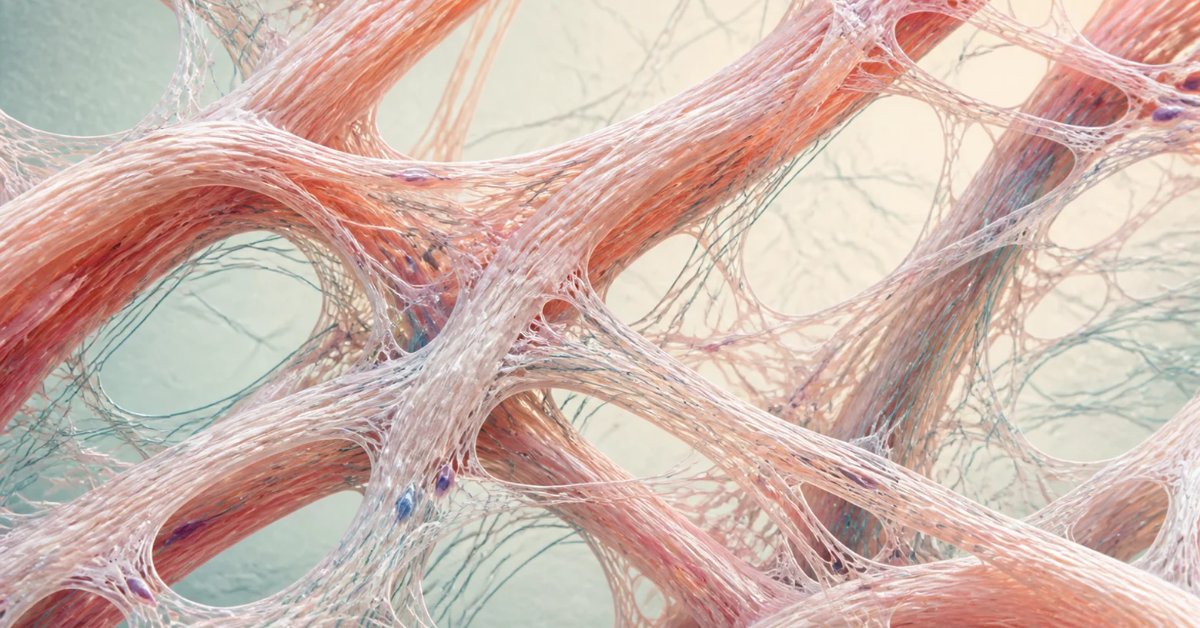
Fascia is a continuous connective tissue matrix that runs through your entire body without interruption. It surrounds every muscle, wraps every organ, weaves between bones, envelops nerves and blood vessels, and links every structure in your body into a single unified system. Once scientists started studying fascia in living, moving bodies — under ultrasound, under load, under stress — it became clear that this tissue is not passive at all. It is alive, responsive, and deeply involved in how you move, how you feel pain, and how well your body recovers.
This episode of Feeling Good Feels Good is about understanding fascia — what it is, what it does, what happens when it breaks down, and what you can do about it.
What Fascia Actually Is
The most common misconception about fascia is that it is just wrapping. Like plastic wrap around a muscle. That framing dramatically understates what fascia does and what it is.
Fascia is not a single structure. It exists in multiple layers throughout the body. Superficial fascia sits just under the skin and plays a role in fluid movement, temperature regulation, and surface-level mobility. Deep fascia surrounds muscles, bones, joints, nerves, and blood vessels, helping coordinate movement and distribute force. Visceral fascia supports and suspends the internal organs, allowing them to move and glide as you breathe, walk, and twist.
What makes fascia different from other tissues is its continuity. These layers are not separate compartments. They blend and weave from one area to the next, creating a single connected network from the soles of your feet to the top of your skull with no true beginning or end. There is no clear separation between structures — just changes in thickness, density, and direction.
This is why fascia is often described as an organ system rather than just a tissue. It is organized. It is functional. And it plays roles that no other single system in the body plays.
What Fascia Does
Understanding what fascia does changes how you think about movement, pain, and recovery at a fundamental level.
The first and perhaps most important function is force transmission. When a muscle contracts, the force it generates does not stay contained within that muscle. It travels through the fascial network to neighboring muscles, joints, and even distant regions of the body. This is why movement is efficient. And it is also why pain so often shows up far from where the problem started.
Research has confirmed specific myofascial chains that transmit force across the body. One of the most well-documented is the superficial back line, which runs from the plantar fascia at the bottom of the foot through the Achilles tendon, gastrocnemius, hamstrings, and all the way to the erector spinae muscles along the spine. This is why plantar fascia restriction can influence knee mechanics, hip tension, and low back pain. The problem is at the foot. The pain is in the back. Fascia explains the connection.
Fascia also provides structural support without rigidity. Think of it less like a rigid frame and more like a tensile web under continuous balanced tension. It holds the body upright and maintains shape while still allowing flexibility and adaptability. Good posture is not about holding yourself stiffly. It is about balanced tension across the fascial network that allows you to be stable without effort.
Fascia plays a central role in shock absorption and load distribution. Every step you take sends force through your body. Fascia spreads that force out so it does not overload any single joint or tissue. When this system is working well, movement feels smooth and resilient. When it is not, stress concentrates in specific areas and overuse injuries, joint pain, and chronic tension follow.
Fascia as a Sensory Organ
This is where fascia gets genuinely surprising.
Fascia is not just structural. It is one of the most sensory-rich tissues in the entire human body. A 2024 review published in Frontiers in Neurology found that fascia is estimated to house over 250 million nerve endings — 25% more than skin and dramatically more than the collective innervation of muscle tissue. The authors described fascia as potentially the body’s richest sensory organ.
These nerve endings include Ruffini endings, Pacinian corpuscles, and free nerve endings. Together they detect stretch, pressure, position, and movement. They are heavily involved in proprioception — your brain’s ability to sense where your body is in space. They are also deeply involved in pain signaling. In many cases what people experience as muscle pain is actually irritation or sensitization of the fascial tissue surrounding that muscle.
This explains something most people have never been able to fully articulate — why stiffness, tightness, and certain types of pain feel so diffuse and so hard to locate precisely. Fascia does not follow the anatomical lines that joint and muscle pain tend to follow. Its sensory signals are more distributed, more global, more body-wide.
When fascia is functioning well, your nervous system receives clear, accurate information about your body’s position, movement, and state. When fascia is restricted or sensitized, that information gets distorted — and the body responds with guarding, compensation, and pain that can feel confusing and hard to explain.
The History of Fascia Research
For most of medical history fascia was considered unimportant. In anatomy labs it was cut away during dissection so students could see muscles more clearly. Because it was removed before anything else was examined, it was never examined. It was concluded to be inert packing material rather than a system worthy of study.
It was not until the late twentieth and early twenty-first centuries that researchers began studying fascia in living bodies and the picture changed dramatically. The development of high resolution ultrasound allowed scientists to watch fascia move, glide, and respond to load in real time. What they found was that this tissue is dynamic. It contracts. It communicates. It adapts. And it plays a central role in almost every aspect of movement and pain that had previously been attributed to muscles and joints alone.
Robert Schleip, Carla Stecco, and a growing community of fascia researchers have established it as a legitimate field of study with its own scientific conferences and peer reviewed journals. The understanding is still evolving but the direction is clear. Fascia is not packing material. It is a primary system.
Fascia, the Nervous System, and Emotional Patterning
This section requires careful language because it sits at the intersection of well-established science and emerging theory. Both deserve honest treatment.
What is well established is that fascia contains a high density of interoceptive nerve fibers — sensory receptors that inform the brain about the internal state of the body. These same interoceptive pathways are deeply involved in emotion regulation, stress perception, and autonomic nervous system activity. Fascia does not just sense movement and position. It senses internal state.
What is also well established is that chronic stress and elevated sympathetic nervous system activity produce measurable changes in connective tissue. Prolonged fight or flight tone alters muscle tension, breathing patterns, and tissue hydration. Over time this can lead to increased fascial stiffness, reduced glide between layers, and heightened sensory sensitivity. This is not metaphor. It is physiology.
Where science transitions into theory is in the specific mechanisms by which these patterns become persistent. Researchers including Robert Schleip have proposed that fascia acts as a body-wide sensory organ that integrates mechanical input with autonomic and emotional signaling. From this perspective fascia participates in the body’s learned patterns of protection and stress response — not because emotions are stored in tissue the way files are stored on a hard drive, but because the nervous system develops protective strategies that involve the fascial network and those strategies can become the body’s default state over time.
Clinically this shows up in familiar ways. Chronic tightness without a clear injury. Asymmetrical tension patterns that do not respond to standard treatment. Emotional responses that arise during bodywork or movement. These experiences are consistent across manual therapy, trauma-informed care, and movement-based practices worldwide. They are harder to measure in a laboratory setting but they are too consistent to dismiss.
The important distinction is in the language. Fascia does not store memories the way the brain does. It participates in the body’s physiological memory of stress, safety, and adaptation through its relationship with the nervous system. It reflects lived experience not symbolically but physiologically. When treatment approaches fascia with that understanding, it becomes less about forcing change and more about creating the conditions in which the nervous system feels safe enough to reorganize.
When Fascia Breaks Down
Fascial dysfunction usually develops gradually. The main drivers are dehydration, immobility, trauma, surgery, and chronic stress — anything that disrupts the hydration, movement, and balanced nervous system input that fascia needs to stay supple.
When fascia becomes dysfunctional it develops what researchers call densification — a thickening and loss of glide between fascial layers that limits movement and alters the way force travels through the body. Unlike scar tissue which involves actual structural change, densification is more like a loss of fluid and mobility within the tissue. In some cases it is reversible with the right interventions.
What fascial dysfunction looks like clinically includes stiffness without a clear injury that does not respond well to standard stretching or massage. Chronic tension patterns that are often asymmetrical. Reduced range of motion that is not explained by joint or muscle findings alone. Pain that moves or does not follow the anatomical patterns of nerve or muscle pain. A sense of compression or heaviness in the body. Symptoms that reliably worsen with stress, poor sleep, or illness.
Underlying many chronic pain conditions — fibromyalgia, postural syndromes, post-surgical restrictions, and certain chronic pain syndromes — is a fascial component that goes unaddressed because the system itself is not well understood in standard clinical practice.
How Fascia Is Treated
Effective fascial treatment works on two levels simultaneously — the mechanical level of the tissue itself and the nervous system level that governs the tissue’s tone and sensitivity.
Manual therapy including myofascial release, Active Release Technique, and other soft tissue approaches gently mobilize fascial layers, improve glide between layers, and reduce densification. These techniques work partly through mechanical means and partly through stimulating the sensory receptors in the fascia that send signals to the nervous system. The body does not just change because pressure was applied to it. It changes because the nervous system received information that allowed it to reorganize.
Chiropractic adjustments contribute to fascial health through a related mechanism. The adjustment stimulates mechanoreceptors in the fascia and surrounding connective tissue — Ruffini endings, Pacinian corpuscles, and free nerve endings — sending afferent signals to the spinal cord and brain that influence motor output and autonomic regulation. Proper joint motion also allows the fascia spanning that joint to move more freely, reducing the tension that builds when joints are restricted.
Gua sha and scraping apply shear and pressure to superficial fascial layers, improving tissue glide, increasing local blood flow, and stimulating mechanoreceptors. The result is not literally tearing or releasing fascia. It is sending new sensory information to the nervous system that allows it to reduce protective guarding and improve circulation.
Movement therapy is essential. Yoga, mobility work, and loaded stretching train fascia to respond dynamically to varied directions of load and stress. The key distinction is variety over repetition — fascia adapts to the demands placed on it, and demands need to come from multiple directions to maintain full three-dimensional health.
Perhaps the most important principle in fascial care is time and consistency over intensity. Unlike muscle which can change relatively quickly in response to training, fascia adapts slowly. Frequent, gentle, and consistent interventions applied over weeks and months produce better results than occasional aggressive treatment. This is not a flaw in the approach. It is the nature of the tissue.
How to Keep Fascia Healthy
Hydration is your most fundamental tool. Fascia is primarily water. Well-hydrated fascia is more elastic, glides more freely, and responds better to both movement and manual therapy. Electrolytes including magnesium and potassium support tissue hydration and fascial tone.
Movement variety matters more than movement volume. Doing the same workout pattern repeatedly trains only the fascial pathways involved in that pattern. Walking, swimming, yoga, resistance training, and any activity that loads the body in varied directions keeps fascia adaptable and three-dimensionally healthy.
Nutrition supports fascia through the building blocks of connective tissue. Protein provides the amino acids — particularly glycine and proline — that fascia is built from. Vitamin C is essential for collagen synthesis. Magnesium and zinc support connective tissue repair. Anti-inflammatory foods reduce the chronic inflammatory environment that contributes to fascial densification.
Sleep and nervous system regulation are not optional add-ons. Because fascia is so intimately connected to the autonomic nervous system, chronic stress and poor sleep directly increase fascial stiffness. Breathwork, meditation, and restorative movement practices that shift the nervous system toward parasympathetic dominance support fascial health through the same pathway that manual therapy does — by reducing the protective tone that keeps the tissue unnecessarily guarded.
Why This Changes How We Understand the Body
Understanding fascia changes the clinical picture in meaningful ways.
It explains why pain is often not where the problem is. A restriction at the foot influences the back. Tightness in the chest contributes to neck pain. Treating only the site of pain without understanding the fascial network that connects everything rarely produces lasting results.
It explains why movement matters more than most people realize — not exercise specifically, but varied, conscious movement that loads the body in multiple directions and keeps the fascial system responsive.
And it explains why the body is a system rather than a collection of parts. Fascia is the tissue that turns individual structures into a unified whole. Once you understand that, the body stops looking like something with isolated problems and starts looking like what it actually is — one continuous, intelligent, deeply interconnected system.
Feeling good feels good.
This post is based on Episode 19 of the Feeling Good Feels Good podcast with Dr. Zachary Tripp. Listen on Spotify or watch on YouTube.