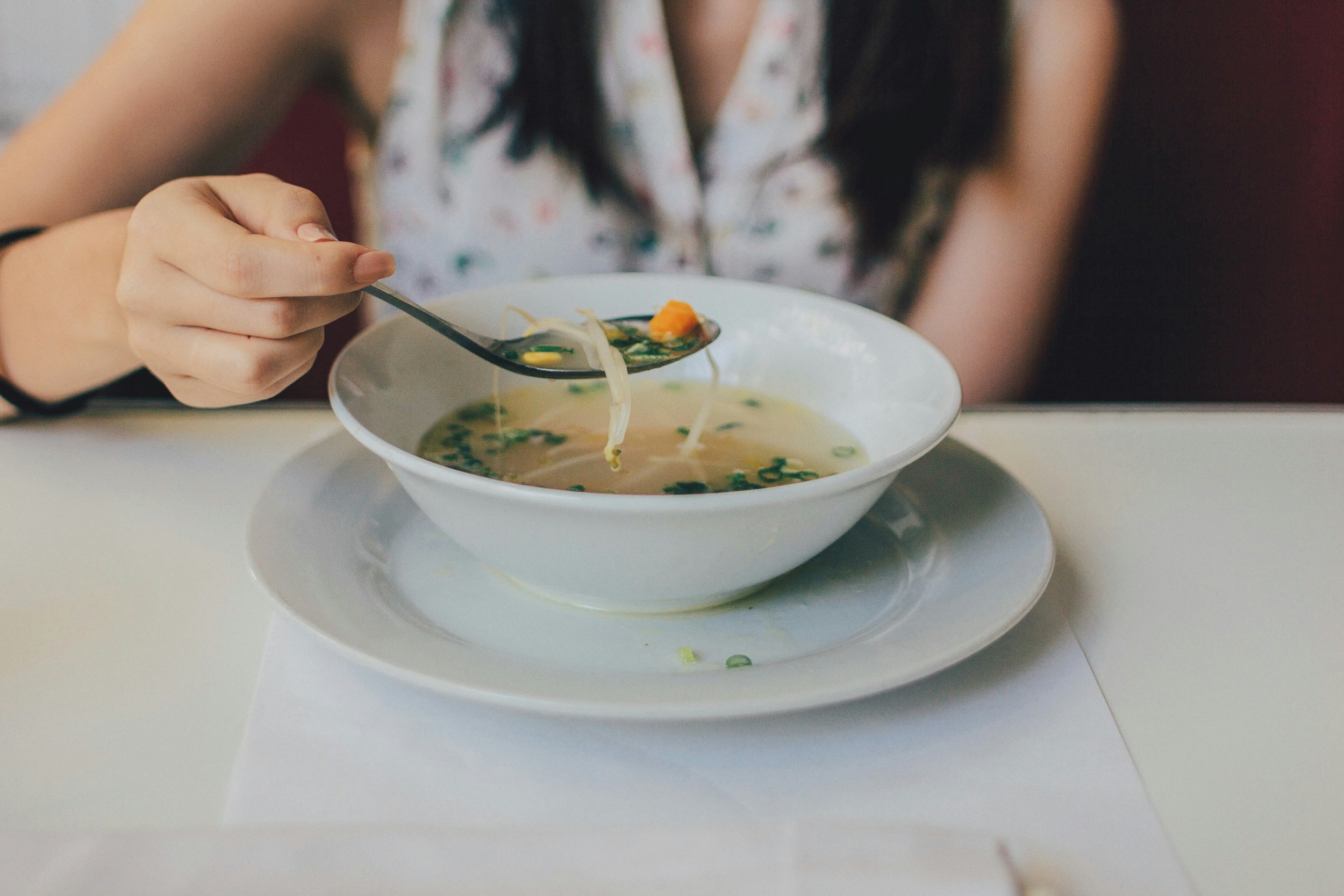
Soup Is Not Just Food: The History, Science, and Healing Power of Broth
Think about the last time you did not feel well. Maybe you were sick. Maybe you were exhausted. Maybe you were just worn down in a way that is hard to explain.
What food came to mind?
Soup. Almost certainly soup. Not a smoothie. Not a protein bar. Not a salad. Soup.
And that is interesting. Because soup shows up in almost every culture, in almost every family, at almost every moment when someone needs care. That is not coincidence. That is not just tradition. There is something real happening when you reach for a warm bowl of broth when your body needs to recover. This episode of Feeling Good Feels Good is about figuring out exactly what that something is.
Broth, Stock, and Soup: What They Actually Are
Before we go anywhere else it helps to be clear about what we are talking about because these words get used interchangeably and they mean different things.
Broth is made by simmering bones, vegetables, or meat in water for a relatively shorter period of time, usually a few hours. The goal is flavor, minerals, and soluble nutrients dissolved into the liquid.
Stock is made by simmering bones, often roasted first, for much longer. Twelve hours. Sometimes twenty-four. The extended cooking time allows collagen and connective tissue to break down into gelatin, giving stock its characteristic body and the ability to set when refrigerated.
Soup is what happens when you take broth or stock and build a full meal on top of it. Vegetables, proteins, herbs, grains, legumes. The broth is the foundation. The soup is the structure built on it.
The reason the distinction matters is that the nutritional and physiological value of what you are drinking changes significantly based on how it was made and what went into it. A long-simmered bone stock and a store-bought carton of broth are technically both called broth but they are doing very different things in your body.
Why Warm Liquid Is Efficient Nutrition
When your body is under stress, physically, emotionally, or metabolically, digestion is one of the first systems to take a hit. The sympathetic nervous system redirects blood away from the gastrointestinal tract toward the muscles and brain. Enzyme secretion decreases. Gut motility slows.
Heavy, dense, dry, or highly processed foods require significant energy to break down in this state. Warm liquid is different. Nutrients suspended in warm water are already broken down, already accessible. The body does not have to work overtime to extract them.
This is why broth has always been the food of illness, recovery, and weakness. From a physiological standpoint it is pre-digested nutrition. You are delivering hydration, minerals, and building blocks in a form the body can use with minimal digestive effort. The warmth itself signals the parasympathetic nervous system that the environment is safe, which allows digestion to actually function the way it is designed to.
Broth is not comforting just because it is warm and familiar. It is comforting because it is efficient. Your body recognizes what it is getting and responds accordingly.
Where Soup Came From
Soup is one of humanity’s earliest cooked foods. Evidence suggests humans were simmering bones and plant material in water tens of thousands of years ago, long before pottery and stoves were common. Hunter-gatherers understood that heat and time unlocked nutrition from animal bones, cartilage, and connective tissue that would otherwise be inaccessible. This was not a recipe. It was ingenuity driven by the need to survive.
What makes soup remarkable in the historical record is its universality. Every major culture developed it independently, arriving at similar conclusions through completely different paths.
In China, congee has been eaten for thousands of years as a medicinal food, simmered with herbs to support digestion and immunity. Jewish communities developed chicken soup as a food for the sick and the recovering, earning it the informal title of Jewish penicillin because of how consistently it seemed to help. In medieval Europe, monks and nuns carefully simmered bone broths with herbs to strengthen the body during illness. In Latin America, soups like caldo de res and sancocho were not just meals but ways to efficiently nourish communities after long days of physical work.
During the 1918 influenza pandemic, hospitals in New York City routinely served chicken broth to patients because doctors observed that it supported hydration, eased digestion, and sometimes appeared to speed recovery. The observation preceded the science, but the pattern was consistent enough that it was treated as medicine rather than just food.
There is something worth sitting with in that universality. Cultures separated by oceans, languages, and centuries all arrived at the same answer. When the body needs to heal, give it warm liquid made from bones and vegetables.
That is not coincidence. That is pattern recognition across all of human history.
What Broth Actually Does in Your Body
Modern research has confirmed much of what traditional cultures figured out intuitively. Bone broth is a complex nutritional matrix. Here is what is actually happening when you consume it.
The collagen that is abundant in animal bones breaks down during long simmering into gelatin, which is rich in specific amino acids. Glycine, proline, and hydroxyproline are the most relevant. These are not just structural building blocks. They have documented physiological functions.
Glycine has anti-inflammatory properties and helps modulate cytokine activity, the chemical messengers involved in the body’s inflammatory response. A 2024 narrative review confirmed its protective role in cardiovascular and metabolic health. It has also been studied for its role in sleep quality and nervous system regulation.
Glutamine supports the intestinal lining by helping maintain the integrity of the gut barrier, the layer of cells that separates gut contents from the bloodstream. A 2024 systematic review and meta-analysis published in the journal Amino Acids confirmed that glutamine supports gut barrier function. Bone broth provides this amino acid in a whole-food context alongside the other components that support its function.
The honest framing here is important. The strongest evidence does not yet come from bone broth clinical trials directly but from research on its individual components. The mechanistic case is solid. Bone broth provides the building blocks that gut cells use for maintenance and repair. Whether drinking broth specifically produces the same results as isolated amino acid supplementation is still being studied. The plausibility is high. The direct human clinical evidence is still developing.
Broth also delivers minerals in a form that is efficiently absorbed. Calcium, magnesium, potassium, and sodium leach from bones and vegetables into the liquid during simmering. These electrolytes support nerve function, muscle contraction, fluid balance, and blood pressure regulation. Every cell in your body is running on the sodium-potassium pump and broth provides the raw materials that keep it functioning.
Soup Through the Lens of Traditional Chinese Medicine
Traditional Chinese Medicine has been guiding food choices for thousands of years and its approach to soup is worth understanding not as dogma but as a framework that has held up remarkably well when examined through a modern scientific lens.
One of the core ideas in TCM is the concept of digestive fire — the energy the body uses to break down and assimilate food. Warm, cooked foods are considered supportive of this digestive fire. They are easier on the system, require less work to process, and support the flow of what TCM calls Qi, the fundamental energy that animates everything the body does.
Cold and raw foods, particularly in winter, are understood in TCM to dampen this digestive fire. They ask more of a system that is already being taxed by cold temperatures and reduced daylight. Warm soups, broths, and stews are the seasonal antidote, nourishing and restorative.
From a modern physiological perspective this framework makes sense. Cold food and cold temperatures activate the sympathetic nervous system, redirecting blood away from digestion. Warm food and warm environments support parasympathetic activity, which is exactly the state in which digestion functions optimally. TCM arrived at this understanding through centuries of clinical observation rather than laboratory research. The conclusion is the same.
Seasonal eating is one of the most underappreciated ideas in nutrition. What your body needs in the middle of winter is genuinely different from what it needs in July. Soup is the winter food not because of tradition but because it delivers what a body under cold stress and shortened daylight actually needs — warmth, minerals, easily absorbed nutrients, and the signal that it is safe to slow down and restore.
What Holds Its Nutrients in the Pot
One of the most useful things about soup is that cooking often increases the bioavailability of nutrients rather than destroying them. This runs counter to the raw food intuition but the chemistry supports it.
Root vegetables including carrots, beets, parsnips, and turnips are high in beta-carotene. Simmering in liquid breaks down the cell walls that encase beta-carotene in raw vegetables, making it significantly more available for absorption. The fiber remains intact, supporting gut motility and microbiome function.
Mushrooms contain ergothioneine, a potent antioxidant that is relatively heat stable. Beta-glucans, the immune-modulating compounds in mushrooms, also survive simmering and enter the broth where they can interact with the immune system directly.
Garlic is the one ingredient that requires timing. Allicin, the compound responsible for garlic’s antimicrobial and cardiovascular benefits, is heat sensitive. Crushing or chopping garlic and allowing it to rest for ten minutes before adding it to the soup allows the enzymatic reaction that produces allicin to complete. Adding it late in the cooking process preserves more of its activity.
Legumes including lentils, chickpeas, and beans benefit from slow cooking rather than suffering from it. Simmering increases the digestibility of their starches and fibers and releases B vitamins, magnesium, and potassium into the broth itself.
The practical summary is this. Simmering is not nutrient destruction. It is nutrient extraction. The liquid you are drinking has absorbed minerals and bioactive compounds from every ingredient you put in the pot.
The Herbs and Spices That Make It Medicine
The difference between a good soup and a genuinely therapeutic one often comes down to what goes in the pot alongside the vegetables and bones. Herbs and spices are not just flavor. They are functional molecules with documented biochemical activity.
Ginger contains gingerols and shogaols, compounds with anti-inflammatory and anti-nausea properties. It supports circulation and digestion. Adding it early in cooking produces depth of flavor. Adding it late preserves more of its bioactive compounds. Both approaches have merit depending on what you are prioritizing.
Turmeric contains curcumin, one of the most researched anti-inflammatory compounds in nutritional science. The research on curcumin is extensive and consistently supportive, with the important caveat that curcumin is poorly absorbed on its own. Piperine, the active compound in black pepper, dramatically increases curcumin absorption when the two are consumed together. This is not folk wisdom. It is pharmacokinetics. Add both to your soup.
Garlic’s allicin content provides antimicrobial and immune-modulating effects. Crush it, let it rest, add it late.
Thyme and rosemary contain polyphenols and antioxidants that are heat stable. They can go in early and will hold their activity through the cooking process.
Who Benefits Most
Soup is genuinely useful for a wide range of situations, but a few deserve specific mention.
People dealing with acute illness benefit from broth because warm liquid supports hydration when appetite is low, soothes the throat and digestive tract, and delivers nutrients with minimal digestive effort.
People under chronic stress benefit because the warm liquid signals the parasympathetic nervous system, supports digestion that has been compromised by sympathetic dominance, and delivers minerals that chronic cortisol elevation depletes over time.
People recovering from physical exertion benefit because the amino acids in bone broth, particularly glycine and proline, support connective tissue repair. The minerals support electrolyte replacement. The warm liquid supports the parasympathetic recovery state.
People with digestive challenges benefit because the pre-digested nature of broth reduces the work the digestive system has to do to extract nutrition.
And people who are simply busy and skipping meals benefit because a mug of good broth is complete, portable, hydrating nourishment that takes seconds to consume.
A Few Personal Favorites
I come back to a few soups consistently, particularly in the colder months.
A simple chicken bone broth with ginger and turmeric is my go-to when I feel something coming on. Long simmered, slightly gelatinous when cold, with the two spices doing meaningful work on the inflammatory side of things.
Lentil soup is my most practical everyday soup. Protein, fiber, minerals, and flavor in under forty minutes. I add cumin, coriander, and a small amount of turmeric with black pepper and it works as a complete meal that holds its nutrition well as leftovers.
Miso soup is my quick daily ritual when I do not have time for anything else. A spoonful of miso in hot water with tofu and green onion takes three minutes and delivers probiotics, minerals, and a warm signal to my nervous system that the day can slow down.
The common thread in all three is simplicity. Soup does not need to be complicated to be nourishing. It needs to be intentional.
The Bigger Picture
Soup is one of the oldest forms of human self-care. The fact that every culture on earth arrived at it independently, through different ingredients and different philosophies but the same basic understanding, tells you something important. When humans needed to heal, recover, or restore, they made something warm, mineral-rich, and easy to absorb. They gave their bodies what they actually needed rather than what was convenient.
That is still available to you. In a world full of processed food, optimization supplements, and complicated dietary protocols, a pot of broth simmered with intentional ingredients is one of the most quietly powerful things you can do for your health.
Feeling good feels good.
This post is based on Episode 18 of the Feeling Good Feels Good podcast with Dr. Zachary Tripp. Listen on Spotify or watch on YouTube.